While we wait
Or Hadash
We will listen to Or Hadash (Shine a New Light) , with a contemporary rendition of a Hebrew phrase taken from the morning prayers and performed by Leah Shoshanah, a musician, healer and former cantonist with Tzedek Chicago.
אוֹר חָדָשׁ עַל צִיּוֹן תָּאִיר
Or hadash, al tsion ta'ir
shine a new light, the world to come is here
וְנִזְכֶּה כֻלָּנוּ מְהֵרָה לְאוֹרוֹ
v'nizkeh chulanu, m'heira l'oro
we go together, toward what the light will show
and we will not be afraid, to march into the darkness
lit up by the light, together we work for justice
Introduction
Why is this Seder different from our earlier Sederim?
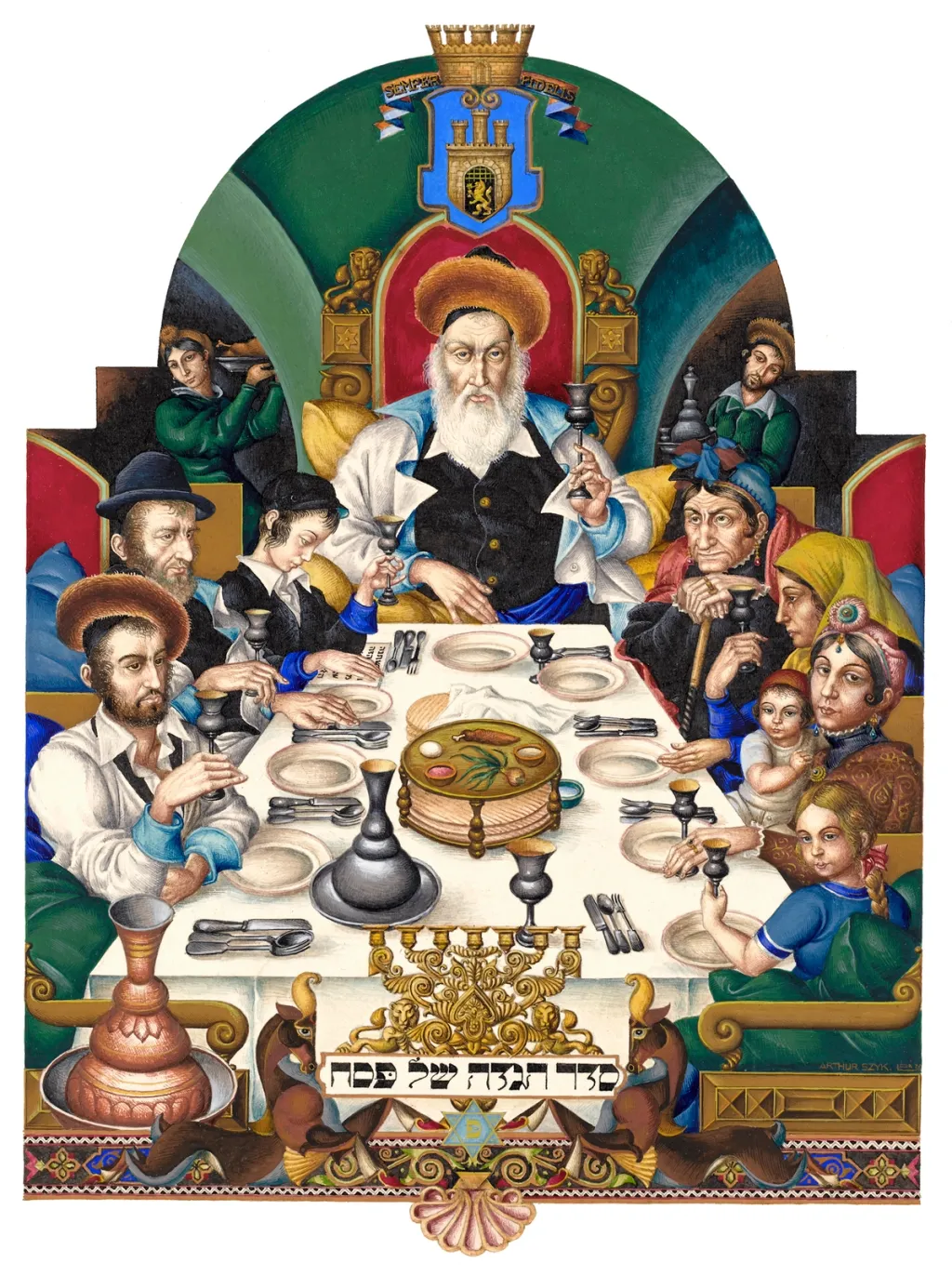
For thousands of years across the globe, Jewish people have celebrated Passover and told the story of Exodus as a reminder that we have not always been free. This year, as we witness continuing and devastating violence and destruction of Palestinian life in the name of Jewish safety, it is clearer than ever before: if we act as if our freedom is dependent on the oppression of another people, we will be living a cruel illusion.
Since the massacre of 1200 Israelis on October 7th, 2023, over 70,000 named Palestinians, including some 20,000 children in Gaza, have been killed by the Israeli military in an unconscionable act of collective punishment, with many thousands more still buried under collapsed ruins, or dead of hunger or treatable illnesses. Meanwhile settlers and the IDF running amok in the West Bank have racked up over a thousand dead, and tens of thousands more terrorised and driven from their homes. Each death, whether Palestinian or Israeli, has meant the loss of a human being, none more important than any other.
Yet, both in numbers and breadth of loss, the heaviest price has been paid by over two million Gazan civilians who once led ordinary, if greatly confined lives. Now, their homes turned to rubble, their schools and universities gone and their basic infrastructure – electricity, water, roads - destroyed, the very survival of each Gazan has been an act of resistance.
At this Passover at a time of profound grief we wish to offer hope, prayer and practical action to achieve a better world.
About the Seder Partners
British Shalom Salaam Trust (BSST) is an all volunteer Jewish charity founded in 2004 that provides grants and advocacy in support of human rights, equality and dignity across Israel, the West Bank (including East Jerusalem), Gaza and the Golan.
It is the only British Jewish organisation dedicated solely to funding grassroots projects across the whole region. Guided by Jewish values of justice and solidarity, BSST supports small, community-led Palestinian, Israeli and joint initiatives working in areas such as human rights, women’s and children’s wellbeing, education, health, environmental protection, culture and aid for marginalised communities.
Operating with minimal overheads and no paid staff, BSST directs at least 98% of its funds straight to local groups, acting as an enabler that responds to community-identified needs rather than prescribing its own solutions.
Na’amod (Na’amod — Hebrew for “We will stand”) is a volunteer-led Jewish movement founded in 2018 and now one of the UK’s largest Jewish activist groups opposing Israel’s occupation and systems of discrimination.
Grounded in Jewish traditions of justice, Na’amod stands in solidarity with Palestinians and challenges uncritical support for Israeli government policies among British Jews. Its work focuses on non-violent campaigning, political education, coalition-building and creating Jewish spaces centred on equality and shared freedom rather than nationalism.
Na’amod supports the wider Palestinian solidarity movement and advocates with policymakers and communal institutions, guided by the principle that safety and liberation must be collective. Alongside its campaigns, it also builds community through events, including in-person seders in London and Manchester.
Jewish Voice for Liberation (JVL) is a Jewish-led organisation for members of trade union, labour, socialist and progressive movements. It is inspired by the principle “Always with the oppressed, never with the oppressor,” and by the long history of Jewish involvement in radical movements including anti-apartheid and civil rights.
JVL stands for rights and justice everywhere: for Jewish people and against wrongs and injustice to Palestinians and all other oppressed peoples.
JVL’s priorities are universal human rights and dignity, justice for all, freedom of expression and opposition to all forms of racism, including antisemitism, while rejecting any hierarchy of racism which exceptionalises Jews.
Jews for Justice for Palestinians (JJP) was formed in 2002 in response to Israel’s denial of rights to Palestinians, asserting that these actions are “Not In Our Name.” It advocates for full equality in human, civil and political rights — regardless of nationality, citizenship, ethnicity or religion — for everyone living between the River Jordan and the Mediterranean Sea.
JJP campaigns against Israel’s system of apartheid and occupation across Israel, Gaza and the West Bank, including settlement expansion, land dispossession and institutional discrimination. It also lobbies the UK and other governments, challenges the conflation of criticism of Israeli policies with antisemitism, and works within British Jewish communities to promote support for Palestinian rights as consistent with Jewish values.
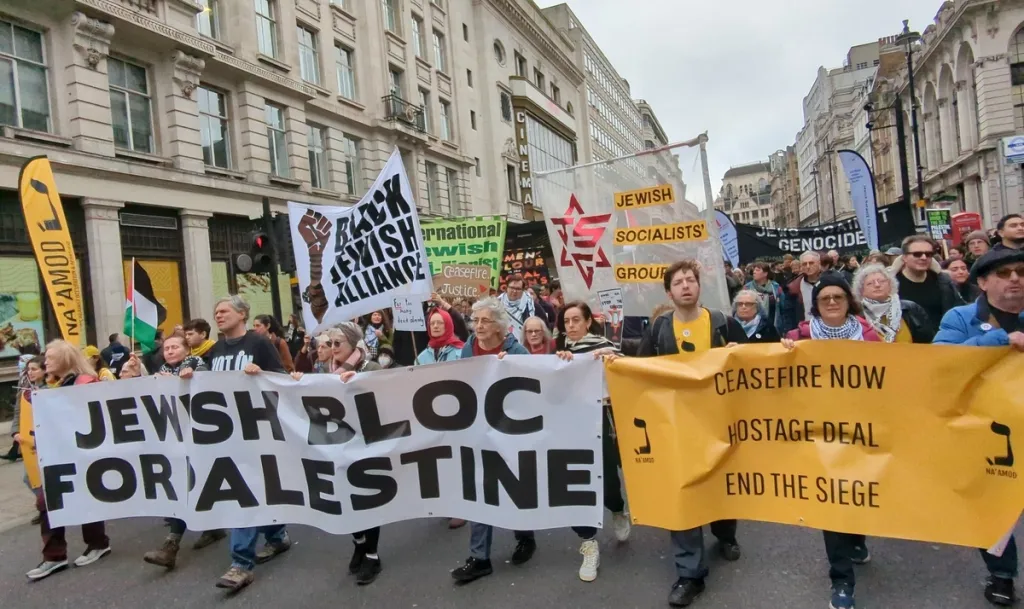
Why are we doing this together?
Tonight’s online Seder brings together Jews and allies across communities, generations and borders to mark Passover as both an ancient ritual and a present-day call to justice. Rooted in the story of liberation from slavery, the gathering affirms that Jewish freedom is bound up with the freedom and dignity of others.
First created during Covid as an act of solidarity with Palestinians, this is the seventh annual online Seder organised by BSST, in partnership with JVL and JJP, and now joined by Na’amod. Together, these groups mobilise Jewish communities to oppose occupation, discrimination and violence, and to stand in solidarity with Palestinians as an expression of Jewish values.
The Seder highlights Passover’s universal message of liberation and a shared commitment to equality, safety and self-determination for everyone living between the Jordan River and the Mediterranean Sea. Intentionally inclusive—welcoming people of all levels of observance, ages, and faiths or none—it aims to model a Judaism grounded in justice, dignity and collective responsibility.
The gathering is also a call to action: to organise, advocate and campaign peacefully for a future in which Palestinians, Jews and other communities can live with freedom, security and lasting peace.
A better world is possible. Tonight, we begin by imagining it together.
BSST initiated this Seder but we could never have got it off the ground—or kept it going—on our own. We thank our partners:
- JVL—especially name-checking Mike Cushman(!)—for years of massive tech support, its (Mike’s) contribution of ideas and time, and its promotion to members/supporters.
- JJP for reinvigorating Jewish activist solidarity for Palestine at the turn of the 21st century, inspiring BSST’s creation, and promoting our Seder via its large members /supporters database.
- Na’amod for joining BSST as content organisers this year, bringing energy and commitment to the solidarity community (along with their extensive experience in offering in-person seders each year).
Rabbi Lev Saul for his contribution to just about everything, and to making it all go with a swing!
Not always a virtuous victim
Nearly all Jewish festivals celebrate our ability to survive persecution, normally with some divine intervention to assist us. There is a typically wry and satisfying Jewish joke about the crucial role of our festival food:
They tried to kill us,
We survived.
Lets Eat!
But this is only part of the story.
In much of our biblical history—and since then—Jews have given as good as we got, and often we have not been innocent victims, eternally persecuted by the people surrounding or governing us. Nothing, nothing justified the Holocaust, nor the pogroms from Imperial Russia to British York, nor the Spanish, Portuguese (and British) expulsions, nor any of the other vicious attacks on Jewish communities that scar our history. Yet today, we are mostly integrated into the countries we landed in and lead ordinary lives.
If we hide from our own truths, evading the fact that people who are Jewish, like everyone else, can be Pharaohs too, oppressors as well as victims, does it really ensure our safety?
We seek a new liberated future where Palestinians and Israelis can live amongst and alongside each other and look after each other as equals - and together shine a light unto the world.
Think of Others by Mahmoud Darwish
As you prepare your breakfast, think of others (do not forget the pigeon's food)
As you conduct your wars, think of others (do not forget those who seek peace)
As you pay your water bill, think of others (those who are nursed by clouds)
As you return home, to your home, think of others (do not forget the people of the camps)
As you sleep and count the stars, think of others (those who have nowhere to sleep).
As you liberate yourself in metaphor, think of others (those who have lost the right to speak)
As you think of others far away, think of yourself (say: "If only I were a candle in the dark").
Special Guest: Sari Bashi
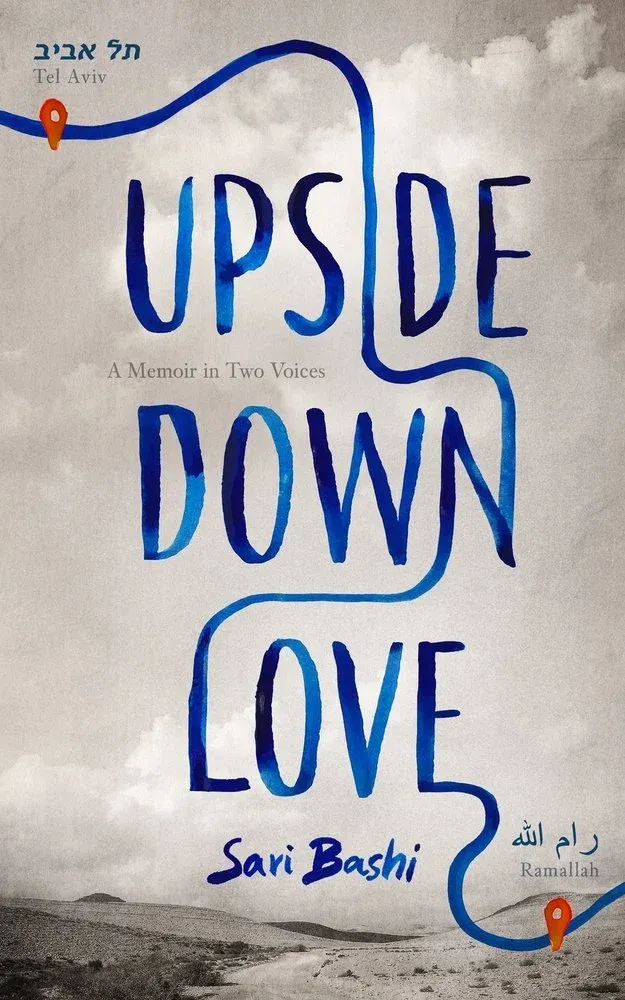
Sari Bashi is a leading Jewish Israeli human rights lawyer, activist and writer based in the West Bank. Her memoir Upside Down Love was recently published in English.
Bedikat Chametz (Search for leaven)
Chametz (חמץ) refers to foods made from five specific grains — wheat, barley, spelt, rye, and oats — that have mixed with water and been allowed to ferment or rise. In practice, this means most regular bread, pasta, cakes, beer, and many baked goods.
During Passover, chametz is avoided because, according to the Exodus story, the Israelites left Egypt in such a hurry that their dough didn’t have time to rise. Instead, they ate flat, unleavened bread (matzah). Removing chametz helps recreate that experience of haste and symbolizes humility, simplicity, and freedom.
So for the week of Passover, Jews traditionally don’t eat chametz and often clean it out of their homes, replacing it with matzah or specially prepared foods. For many Chamtez has many symbolic meanings. For example, as dough puffs up, chametz can symbolize pride, arrogance, or self-importance. Removing it represents humility and self-reflection.
As we search our homes, we also search our hearts. What internal chametz has accumulated over the last year? What has puffed us up? What has made us ignore our good inclinations? What has turned us from the paths our hearts would freely follow?
Everyone writes down some personal chametz of which they want to be rid. When everyone is finished, we put our chametz together in a bowl for burning.
Together we recite the blessing for burning chametz:
בָּרוּךְ אַתָּה יי אֱלֹהֵינוּ מֶלֶךְ הָעוֹלָם אֲשֶׁר קִדְּשָׁנוּ בְּמִצְוֹתָיו וְצִוָּנוּ עַל בִּעוּר חָמֵץ
Baruch atah Adonai, eloheinu Melech ha-olam, asher kidshanu b’mitvotav vitzivanu al biur chametz.
Blessed are You, Lord our God, King of the universe, who has made us holy through His commandments and has commanded us concerning the removal of chametz (leaven).
Lighting candles
The seder officially begins with a physical act: lighting the candles. In Jewish tradition, lighting candles and saying a bracha (blessing) over them marks a time of transition, from the day that is ending to the one that is beginning, from ordinary time to sacred time. Lighting the candles is an important part of our Passover celebration because their flickering light reminds us of the importance of keeping the fragile flame of freedom alive in the world.
Blessing
read by Charlotte Neslenבָּרוּךְ אַתָּה יי אֱלֹהֵינוּ מֶלֶךְ הָעוֹלָם אֲשֶׁר קִדְּשָׁנוּ בְּמִצְוֹתָיו וְצִוָּנוּ לְהַדְלִיק נֵר שֶׁל יוֹם טוֹב
Baruch atah Adonai, eloheinu Melech ha-olam, asher kidshanu b’mitvotav vitzivanu lehadliyk ner shel yom tov.
Blessed are You, Eternal God, sovereign of the universe, who makes us holy with Your commandments and commands us to kindle the festival light.
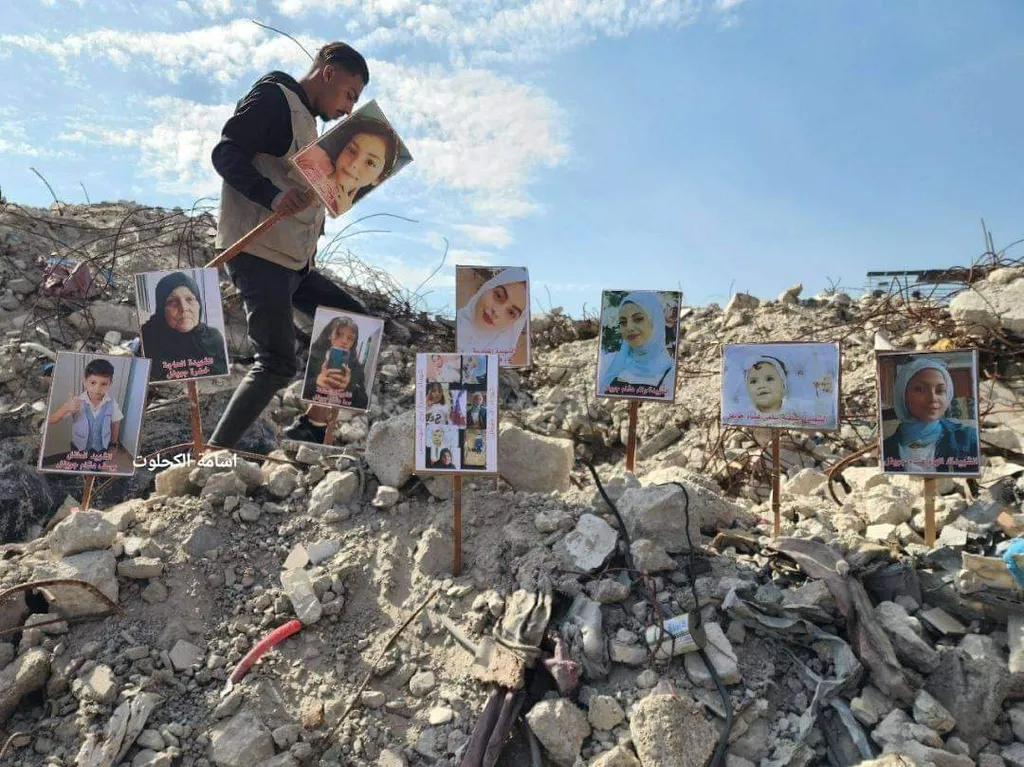
With an already wretchedly inadequate mains electricity supply, Gaza has avoided slipping entirely into darkness in the last two years because of its residents’ heavy reliance on solar power systems. When the IDF bombed the Nuseirat Refugee Camp’s hugely popular community centre run by FADE (the Future Association for Development and the Economy) this spelt disaster. BSST, a longtime friend of FADE, was the first to guarantee funding, after FADE Director, Ali Alderawi sought emergency help from overseas supporters.
“…our area was subjected to a brutal bombardment, damaging our buildings and completely destroying our solar energy system, our lifeline. This was the pillar enabling us to operate our offices, house our staff, communicate, deliver critical services - family support, education, environmental action, medical aid, therapeutic help for children, access to water…we've lost our ability to continue…We need solar panels, batteries, inverters, all necessary components. Your contribution…will be an investment in the resilience of an entire community, in our ability to keep planting seeds of hope. Every penny you contribute will help light the path to the future for the people of Gaza.”
Kiddush (Sanctification)
The First Cup of Wine
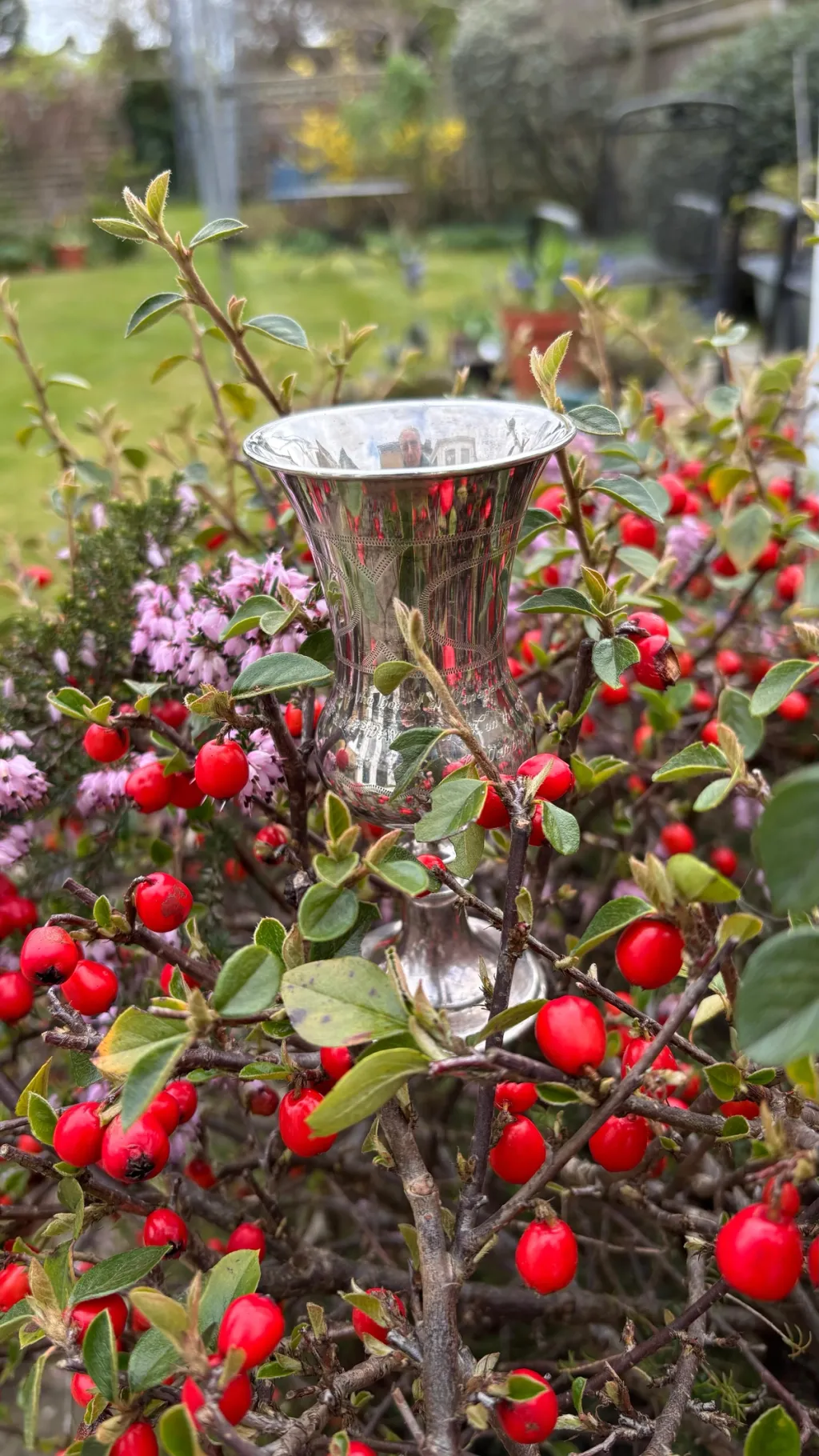
(read by Megan from Na’amod London)Kiddush means sanctification. We will recite a blessing over the wine as an act to sanctify the evening.
Tonight, Jews worldwide remember oppression from Egypt, while in Gaza and the West Bank, Palestinians continue to live under decades of oppression. In the face of violence and injustice, this gathering affirms that, grounded in faith, history, and shared humanity, we protest the desecration of life and call for the recognition of the sanctity of every human being.
Pour the first cup of wine before reciting:
בָּרוּךְ אַתָּה יְיָ אֱלֹהֵינוּ מֶלֶךְ הָעוֹלָם בּוֹרֵא פְּרִי הַגָּפֶן
Baruch Atah Adonai Eloheinu melech ha’olam, borei pri hagafen.
Blessed are You, Eternal God, sovereign of the universe, who creates the fruit of the vine.
One of the defining characteristics of the area is ancient olive trees which the settlers and the IDF are hellbent on destroying. Rabbis for Human Rights both participate directly in trying to protect existing trees and planting new trees. They provide essential back up for solidarity activists who undertake what’s known as ‘protective presence ‘work in the villages to try and place a buffer between the villagers under attack and the IDF.
Urchatz (Wash the hands)
The First Hand Washing
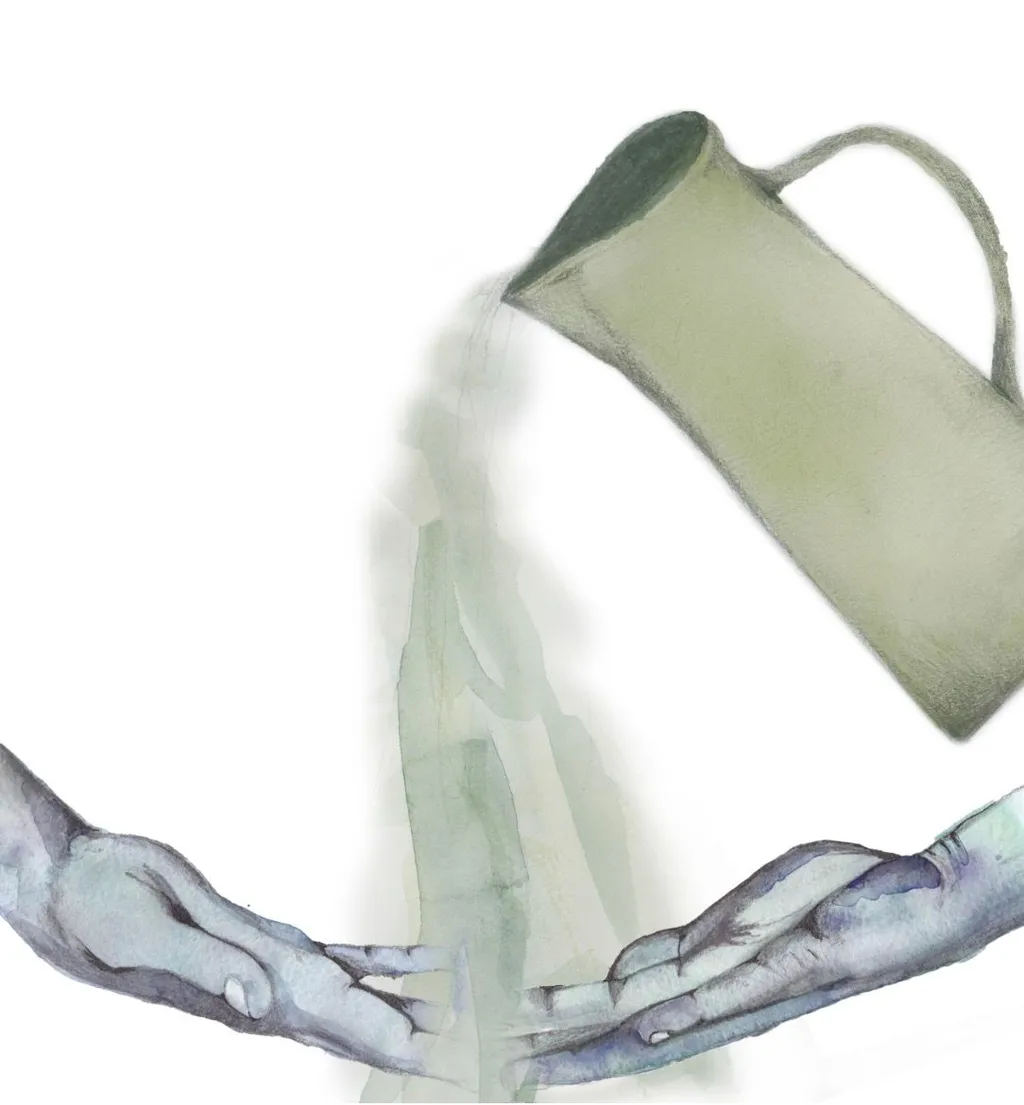
At the beginning of the Seder there’s a quiet ritual called Urchatz, the first hand washing. We wash our hands with water, but—unlike many Jewish blessings—we don’t say a prayer.
Traditionally, this connects to ancient Temple purity practices and prepares us to eat vegetables dipped in water. But many people today understand it more symbolically. Today, many of us treat it as a pause—a way to wash off the day and to understand what brings us to the zoom table together.
The Refuge of Spring by Nada Shawa
Nada Shawa is a Scottish Palestinian poet who writes in solidarity with Gaza where she spent her early childhood. This is her poem for our Seder tonight and we are especially grateful to her.
The Refuge of Spring
Read by Nada ShawaWe celebrated Spring under a grand sycamore tree bearing the most succulent sweet figs. I dream there will be jumaiz figs in heaven, if my Palestinian soul is permitted entry.
Under that sycamore, we cracked our childishly painted eggs an d planned the liberation of our minds. We were blessed by Gaza’s moonlight, which continues to shine on Mother Earth to comfort the exiled. The scent of my mother’s jasmine tree was carried on Gaza’s gentle breeze like a blissful promise.
***
My refuge lies in blooming meadows where the nourished soil’s kiss creates majesties of peace.
My torment lies in Gaza’s obliteration, which has revealed the fraudulent camouflage used by feeble narcissists who seduced my people for generations.
My refuge lies in the splendour of the delicate Japanese Sakura blossoms that release the restrained grief to embrace courageous hope.
My torment lies in the gluttonous profiteers who dispense with the sanctity of life. They carve their murky gas pipelines through our battered hearts for a killer deal.
My refuge lies in Gaza’s sunsets and my mother’s prayer echoing in the ruins of our house she worked a lifetime to build, with love in each brick. It was a house for peace, not war.
My torment lies in deadly oppressors who collude to unleash a wicked aggression, attempting to forever banish human conscience, leaving desolate souls behind.
My refuge lies in my friend’s dewy eyes assuring me, unconditionally, I am part of the human race.
My torment lies in cackling hounds, which devour my bones in a state of delusional victory without the souls they chose to discard long ago.
My refuge lies on winding roads free from barriers of injustice, through glens of humble courage and kind hearts.
My torment lies in my ancestors’ spirits as they bear witness to the degradation of humanity; as monsters dance on their desecrated graves.
My refuge lies in the power of the people who are awakening with each passing second, to gaze up at a truthful clear sky.
My torment lies in the stench of complicity, which enabled an unbound killing spree by loathing fascists, forcing me to confront the hatred they attempt to plant in our Palestinian hearts.
My refuge will always lie in the hope of Gaza’s rising spring, with the enduring colours of sumud – steadfastness. The evergreen sprouting resilience of a people that can only grow in strength. We shall write our own stories of eternal love, after surviving heinous contempt to embrace the future, with all the ghosts of spring.
Karpas (green vegetables)
Blessing
“If the olive tree remembered its planter, its oil would become tears.”
—Mahmoud DarwishTonight, dipping green vegetables into salt water symbolizes both sorrow and hope. The salt water recalls the tears of enslaved peoples—historically and today—including Palestinians affected by occupation, victims of violence in Gaza, and Israeli hostages and their families. The green vegetables represent growth, renewal, and spring, reminding us that liberation and renewal emerge through hardship, blending grief with the promise of ongoing freedom.
We dip a green vegetable in salt water, and say:
בָּרוּךְ אַתָּה יי אֱלֹהֵינוּ מֶלֶךְ הָעוֹלָם, בּוֹרֵא פְּרִי הָאֲדָמָה
Baruch Atah Adonai Eloheinu melech ha’olam, borei pri ha-adamah.
Blessed are You, Eternal God, sovereign of the universe, who creates the fruit of the earth.
Projects
Na’amod Protective Presence Work
Na'amod utilises “protective presence” as a form of nonviolent direct action in the occupied West Bank to stand in solidarity with Palestinian communities facing violence in the villages of Massafer Yatta. Last year a group of 5 Na’amod activists undertook protective presence work in the Masafer Yata region. Na'amod is committed to regularly sending out further groups. Below is a short video from one of the team reflecting on their recent experience.
Burin Kite Festival
To exemplify grief and hope we highlight Na’amod's support for the Solidarity with the Burin Kite Festival to support hope for a better future.
Kotof El-khair Association
We also hold up the Kotof El-khair Association, a community group in central Gaza’s Deir el-Balah. Funded by BSST, the association provides a wide range of services including cultural events, a kindergarten for 100 children, women’s rights workshops, disability support training, free medical days, children’s summer camps, and humanitarian aid. We will play their uplifting video they produced last year (although we know they have incurred so much more hardship and grief since the video was produced).
Yachatz (breaking the middle matzah)
Ha Lachma Anya—This is the bread of affliction
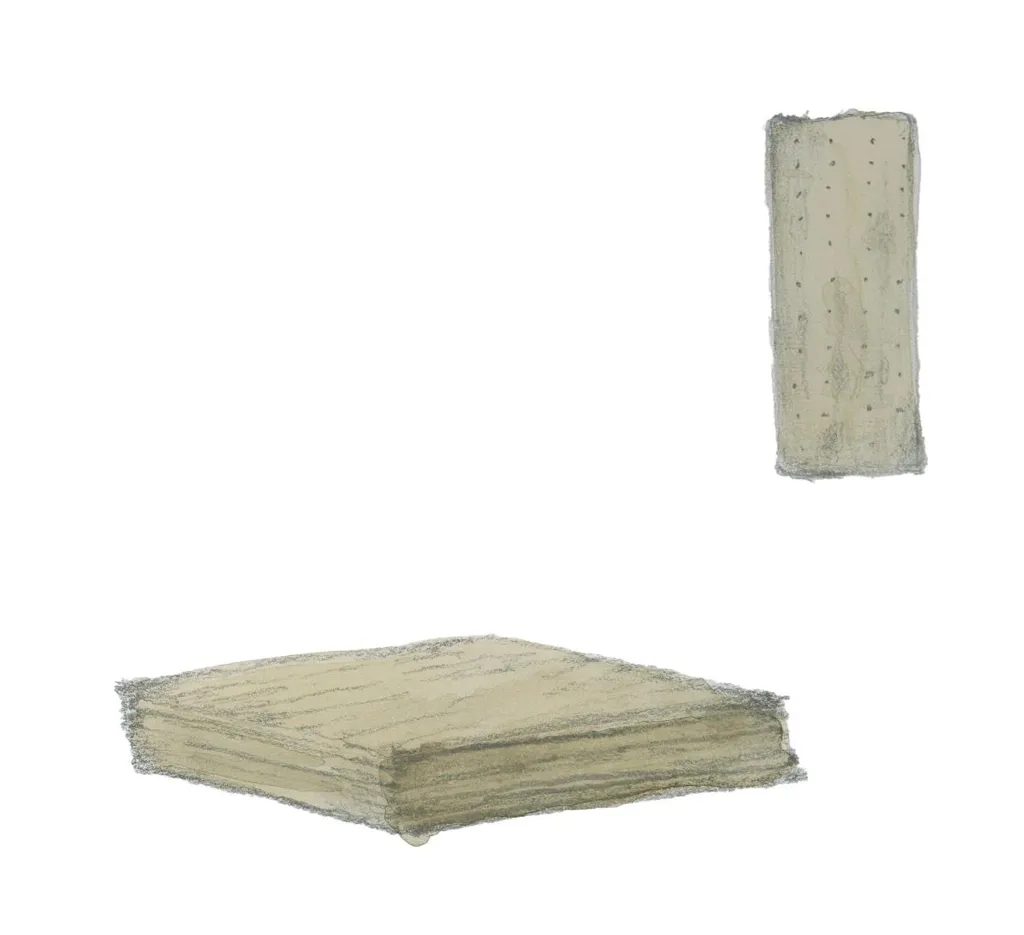
Central to Pesach is Matzah: the bread of affliction, a flat cracker baked in extreme haste by those fleeing oppression who had no time to wait for the dough to rise. The matzah reminds us that when the chance for liberation comes, we must seize it even if we do not feel ready — indeed, if we wait until we feel fully ready, we may never act at all.
Yachatz is the step in the Passover seder where the middle of three pieces of matzah (unleavened bread) is broken in two.
Ha Lachma Anya - this is the bread of affliction
(read by Alex from Na’amod, Manchester)הָא לַחְמָא עַנְיָא דִי אֲכָלוּ אַבְהָתָנָא בְּאַרְעָא דְמִצְרָיִם. כָּל דִכְפִין יֵיתֵי וְיֵיכֹל, כָּל דִצְרִיךְ יֵיתֵי וְיִפְסַח הָשַׁתָּא הָכָא, לְשָׁנָה הַבָּאָה בּֽעׇלמׇא דֽתֽיָא. הָשַׁתָּא עַבְדֵי, לְשָׁנָה הַבָּאָה בְּנֵי חוֹרִין
Ha lachma anya di achalu avhatana b’ara d’mitzrayim. Kol dichfin yeitei ve-yeichol, kol ditzrich yeitei v’yifsach. Hashata hacha, l’shanah habaah be’alma ditya. Hashata avdei, leshanah habaah bnei chorin.
This is the bread of affliction that our ancestors ate in the land of Egypt. All those who are hungry let them enter and eat, all who are in need let them enter and celebrate Passover. This year we are here, next year let us be in the world to come. This year we are slaves, next year let us be free people.
Three pieces of matzot are placed on the table. The middle one is broken in half; one half is hidden and later found by children for a small prize.
The broken bread symbolizes hardship and loss — the idea that people and communities are often fractured by history and injustice. But it also points to repair and hope: even if some damage can’t be undone, communities can still rebuild and work toward freedom and equality.Breaking and hiding the bread acknowledges brokenness, while the search for it represents resilience and the possibility of making things better.
Next year, may all Israel-Palestine’s people enjoy the bread of plenty.
Food has now taken on another and terrible significance: as a weapon of war. Over the last two years, Israeli policy has left Palestinians enduring a daily struggle to feed themselves.
In Gaza, IDF tanks reduced agricultural land and produce to mud. UNRWA, the most important aid agency, was vilified and largely shut down. Hundreds of aid workers were killed. For long periods, food aid was completely halted, and even now, in a supposed ceasefire, only a tiny proportion of aid needed is being allowed in.
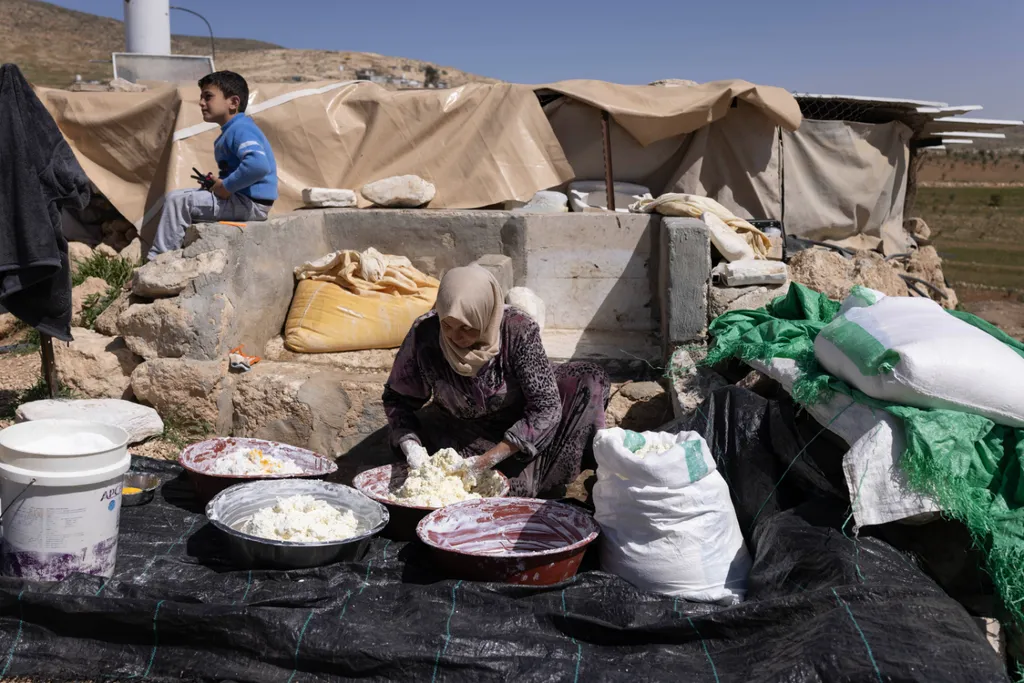
Meanwhile, the West Bank sees constant vicious assaults by settlers and the IDF against Palestinian villages in Massafer Yatta and in the Jordan Valley. Many villagers in these two target areas for expulsion now rely on food and animal provisions brought in by Israeli Jewish supporters. Two very active Israeli groups, the Jordan Valley Activists and the Villages Group, are grant-aided by BSST, with crucial logistics provided by Rabbis for Human Rights.
While the pervasiveness of settler/IDF attacks on West Bank villages is now being acknowledged, the IDF’s destruction of four refugee camps at gunpoint last spring has been largely forgotten. But not by BSST, and definitely not at this Seder.
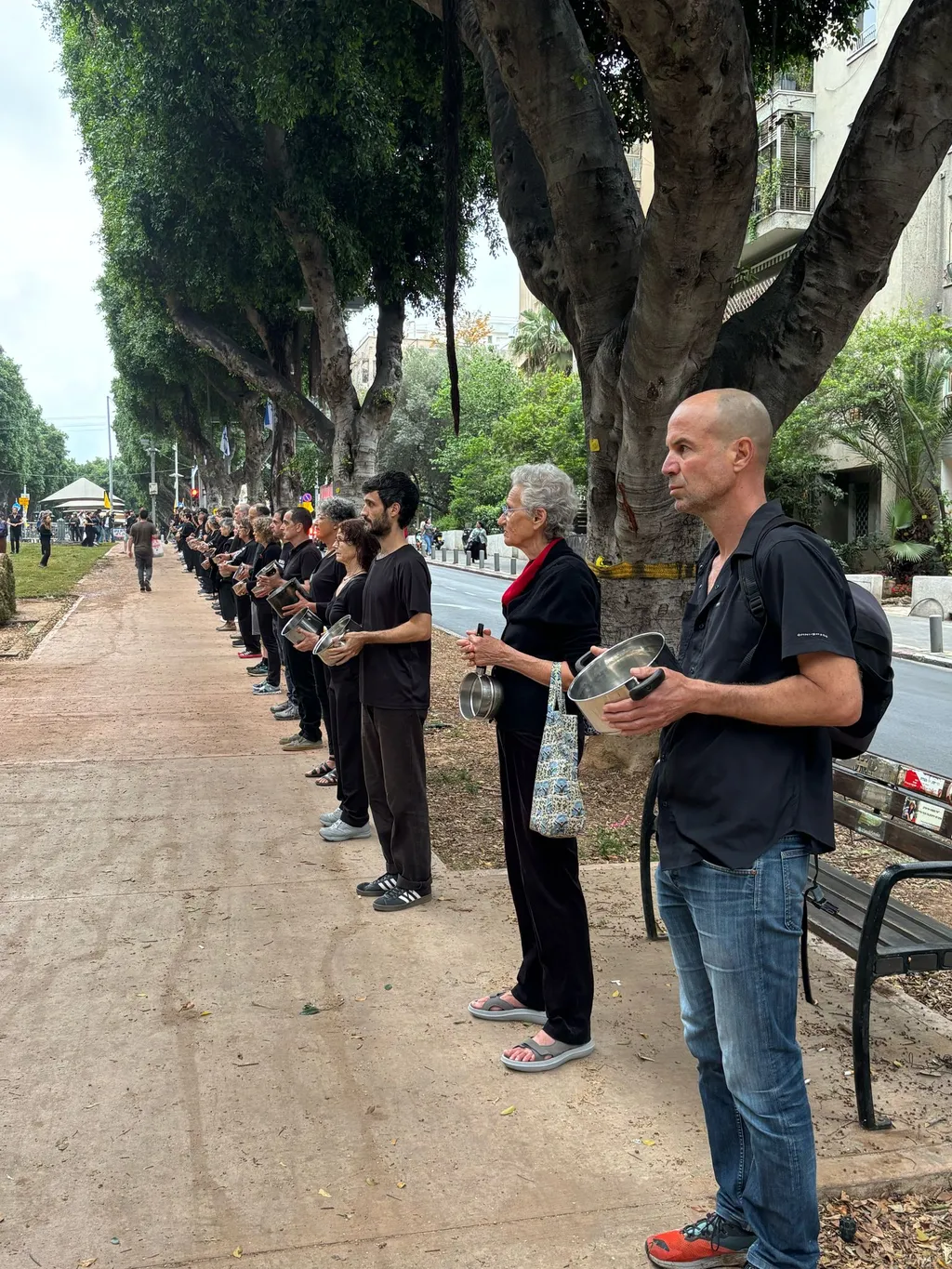
We also want to highlight two BSST funded projects that highlight the immense hardship of the occupation and inspiring work of Palestinians and Israelis to resist: Parents Against Child Detention (PACD) and the Al Tafawk centre.
Parents Against Child Detention (PACD)
“Speaking out is resistance. Listening is the beginning of change” says Parents Against Child Detention (PACD) which aims to put Palestinian children at the centre of public discussion in Israel. Via nationwide street events, conferences and art exhibitions in public spaces, it opposes the Israeli state’s cruelty and discrimination against Palestinian children of the West Bank. It also leads trips to military courts to see trials of Palestinian children, provides briefings for diplomats and other internationals, deploys social media, videos, graphics, personal stories and powerful messaging to bring children’s voices to the forefront and break the wall of silence. Banging empty pots - as shown above by BSST-grantee Parents Against Child Detention - has become the symbol of Israeli opposition to starvation as a weapon of war. We will now watch a short message from Moria Shlomot the CEO of PACD.
Al Tafawk
Among the lives and hopes the IDF set out to destroy when it expelled the entire population of the Jenin Refugee Camp were those of the teachers and their poverty-stricken pupils at Al Tafawk, the Camp’s sole children’s centre. More than once before, BSST had helped rebuild Al Tafawk's smashed-up remains after an IDF incursion, but this was to be the final cruelty. Not only had the centre delivered an exciting and creative education, Al Tafawk also ensured its children no longer missed out on the basics: warm clothing, a daily hot meal and a loving and safe environment.
The One Who Makes Peace, Rabbi Ariel Tovlev
blessing bread bought from the supermarket our blessing says, thank you God for bringing forth bread from the earth
but this bread didn’t come from the earth it came from a store from a factory from flour ground from wheat from the earth
this bread did not sprout forth it was created from human hands
we don’t thank God for the wheat which actually came from the earth
God did not create bread but God knew we could
my kids ask, why do we pray for God to make peace? I tell them, God makes peace like God makes bread
which is to say we have all the necessary ingredients
peace will not sprout forth it will be created from human hands
thank you God, for giving us the wisdom to turn wheat into bread thank you God, for giving us the wisdom to turn love into peace
Four Children
Our sages taught of four types of children: wise, wicked, simple, and silent.
Who is the wise child? The wise child is a solid comrade. The wise child says: there can be no freedom unless we are all free. The wise child demands justice and human rights for all humanity. What do we say to the wise child? We offer them a position on our governing executive, and we encourage them to donate to our appeal.
Who is the wicked child? The wicked child is the opponent of justice. The wicked child cheers for bombs and salutes invasions. Worse still, the wicked child uses slippery talk to convince others their defences of murder are justified. What do we say to the wicked child? Had you been in Egypt, you would have taken Pharaoh’s side!
Who is the simple child? The simple child is the dogmatist, who can only think in absolutes. The simple child demands ideological purity from everyone, and insists that only those who repeat the same empty slogans are righteous. What do we say to the wicked child? We tell them that the task of ending apartheid needs a broad coalition, and is too important for petty factional disputes.
Who is the one who does not know how to speak? The silent child is the one who knows that Palestinian freedom is essential, but fears the repercussions of speaking out. These are the community leaders who privately agree with you but are silenced by fear. What do we say to the mute child? We say: raise your voice, and we will join you in chorus!
Humans Without Borders (HWB), funded by BSST, is a volunteer group of Israeli drivers who provide free transport and support for West Bank Palestinian families whose children need medical treatment in Israel and East Jerusalem. They help with travel across checkpoints, language and cultural barriers, hospital visits, and related expenses, often covering costs themselves.
Four Questions
Mah Nishtana
to be sung by Sophie Neslenמַה־נִּשְׁתַּנָּה הַלַּֽיְלָה הַזֶּה מִכָּל־הַלֵּילוֹת?
שֶׁבְּכָל־הַלֵּילוֹת, אָֽנוּ אוֹכְלִין שְׁאָר יְרָקוֹת; הַלַּֽיְלָה הַזֶּה, מָרוֹר.
שֶׁבְּכָל־הַלֵּילוֹת, אֵין אָֽנוּ מַטְבִּילִין אֲפִֽלּוּ פַּעַם אֶחָת; הַלַּֽיְלָה הַזֶּה, שְׁתֵּי פְעָמִים.
שֶׁבְּכָל־הַלֵּילוֹת, אָֽנוּ אוֹכְלִין בֵּין יוֹשְׁבִין וּבֵין מְסֻבִּין; הַלַּֽיְלָה הַזֶּה, כֻּלָּֽנוּ מְסֻבִּין.
Mah nishtanah halailah hazeh mikol haleilot?
She-bechol haleilot anu ochlin chametz umatzah, halailah hazeh, kuloh matzah.
She-bechol haleilot anu ochlin sh'ar y'rakot, halailah hazeh, maror.
She-bechol haleilot ein anu matbilin afilu pa'am echat; halailah hazeh, shtei pe’amim.
She-bechol haleilot anu ochlin bein yoshvin uvein m'subin; halailah hazeh, kulanu mesubin.
How is this night different from all other nights?
On all other nights, we eat chametz (leavened foods) and matzah. Why on this night, only matzah?
On all other nights, we eat all vegetables. Why, on this night, maror (bitter herbs)?
On all other nights, we don't dip even once. Why on this night do we dip twice?
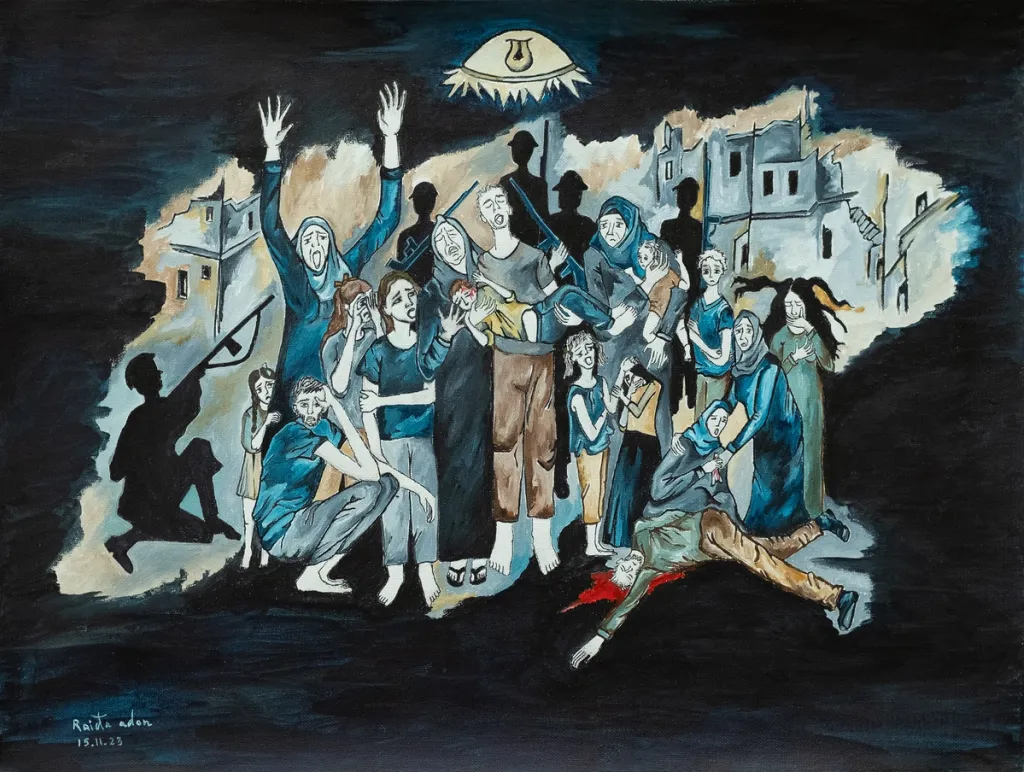
The image above is from an exhibition: 'Innocence Disrupted - Children in Wartime', organised by Israeli group Parents Against Child Detention (PACD), which is funded by BSST. The Israeli government has banned PACD from the Knesset.
The picture was painted by Raida Adon, a Palestinian citizen of Israel, professional artist and educator, born in Acco, now living in Jaffa. Find her at www.raida-adon.com.
Maggid: The Short Story of Exodus
Maggid—“telling” or “narrating.”
Go Down Moses
Paul RobesonWhen Israel was in Egypt's land,
Let my people go,
Oppressed so hard they could not stand,
Let my people go.
Refrain: Go down, Moses, way down in Egypt's land,
tell old Pharaoh: Let my people go.
The Lord told Moses what to do,
Let my people go,
to lead the Hebrew children through,
Let my people go.
[Refrain]
As Israel stood by the waterside,
Let my people go,
at God's command it did divide,
Let my people go.
[Refrain]
When they had reached the other shore,
Let my people go,
they let the song of triumph soar,
Let my people go.
[Refrain]
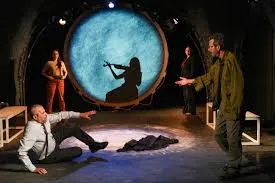
We don’t approach the Exodus as literal history. Instead, we understand it as a formative story that shapes identity through shared memory and ritual. Its power lies in the universal themes it expresses — oppression, resistance, community, and the pursuit of freedom. We also recognise how storytelling and collective narratives play a similar role for Palestinians, helping sustain their identity, resilience, and hope for a better future. Deeply rooted, competing narratives are central to understanding the worsening of the Israel–Palestine conflict, as they shape how each side interprets events and justifies actions. In the hope that both communities can find ways to understand each other better, BSST has helped fund a new play (based on the novel Apeirogon of the Irish author Colum McCann who researched the Israeli Palestinian conflict) that explores the real story relating the the joint journey of a bereaved Israeli and Palestinian father, who, in an exceptionally brave way, found in their personal pain the power of reconciliation. The play has been adapted by Avner Ben-Amos and directed by Sinai Peter and performed at the Jaffa theatre.
A wandering Aramean was my father
The Exodus story meets the story of the last two years
Deuteronomy 26:5-10
A wandering Aramean was my father…
“I feel like I have become a burden on my family. When we were displaced, they had to push me on a wheelchair. With toilet queues extremely long in the camp where we stay, I need adult diapers, which are extremely expensive. I need medication for diabetes, blood pressure and a heart condition, and have had to take medicine which has expired. I always feel like these young children, they are the ones who deserve to live, my grandchildren. I feel like I’m a burden on them, on my son.”
—Azizaand he went down into Egypt…
“On October 7, my heaven turned to hell. Sirens began. Hamas terrorists invaded. And I was ripped away from my family, never to see them again. For 491 days, I was kept mostly underground in Hamas terror tunnels, chained, starved, beaten, and humiliated. I was held captive in the darkness, isolated from the world by Hamas terrorists. They took pleasure in our suffering. I survived on scraps of food with no medical attention and no mercy. When I was released, I weighed just 44 kilos. I had lost over 30 kilos, nearly half my body weight.”
—Eli Sharabiwith a few people and lived there…
“Now, it feels as if a flash flood of blood engulfs the landscape and my grief is one small branch caught in the current. Everyone I know from my childhood has a horror story to tell. During the attack, I received cries for help from friends, who were holding the doors of their safe rooms for dear life while terrorists were trying to open them. We are all scared, hurt and distraught.”
—Magen Inonand became a great nation, powerful and numerous…
“At first, it was like “This is a just war,” and on my last day on reserve duty, I woke up in Sde Teiman and simply saw how an Abu Ghraib-like thing was taking shape. You see normal, pretty ordinary people, reaching a point where they abuse people for their own amusement, not even for an interrogation or anything. For fun, to have something to tell the guys, or for revenge.”
—861426 IDF First SergeantBut the Egyptians mistreated us…
“At the detention facility, we were put in a barracks, where there were more than a hundred detainees. We were kept there for more than 10 days. I was very scared and stressed, and I also worried about my family. Then they took me for interrogation, beating us intensely the whole way to the interrogation room. They relished every blow they gave us. To go to the bathroom, you had to get permission from the officer. He often refused to allow it. We got food and drink according to their mood too. They brought food only when they felt like it, and what we got were slices of bread and a small piece of cheese.”
—Mahmoud al-Bassuiniand made us suffer…
“Today is my daughter’s 12th birthday, and to be honest I was glad that she felt excited, she had been counting down to it since the beginning of this month. But last night she was like, “you know what I wish for my birthday? I just wish that it won’t be my death day. I wish I won’t be targeted by a rocket and the people won’t have to say ‘wow, she was killed the same day that she was born.’ So, yeah, this is just a glimpse of our everyday life in Gaza.”
—Fidaa Alarajsubjecting us to harsh labor...
“I lived a normal life, like any father and husband — a happy one — until the war turned everything upside down. I lost my entire family and became the only survivor. My grief and sorrow still surround me, and my tears are trapped in my eyes.”
—Mohammad Abdulrahim Khalil Al-LadawiThen we cried out to the God of our ancestors…
“How can the world allow this to happen? Entire families wiped out. Parents burying their children, others unable to even do that, because their children are buried under rubble. Aid workers killed. Hospitals and schools destroyed. Health professionals forced to treat the injured without basic supplies. The headlines of the last 16 months showed that my government—the UK government—along with other Western leaders, stood by, complicit in the suffering. I never knew politics could be so cold, so indifferent to human life.”
—Shaima Al-Obaidi
and the Eternal One heard our voice and saw our misery, toil and oppression.
“Given how much I gulp down doses of hope each day, more than the vitamin D I should be more diligent about, this particular quote of the late Rabbi Jonathan Sacks at this challenging moment in our history resonates deeply with me: “It is not too much to say that Jews kept hope alive, and hope kept the Jewish people alive.” So as Jon and I have said since the beginning of our painful odyssey, hope is not a suggestion; nor is it advice, no. Hope is mandatory.”
—Rachel Goldberg-Polin
So God brought us out of Egypt…
“In Israel, refusing to serve for political and moral reasons carries a heavy personal cost. Socially, it may entail ostracization and shaming. Legally, because military conscription is mandatory – with certain exemptions, including for Palestinian citizens of Israel, or on specified grounds – refusing to enlist on conscientious grounds is punishable with prison time. I was repeatedly sentenced to military prison by an Israeli army colonel. In total, I served 197 days, spread over five separate terms. Until the final hours of my detention, I had no idea how many more months of prison awaited me. Conditions in military prison are harsh. There were days I was placed in isolation due to threats from other inmates. Every day, I was forced to stand at military attention for around four hours. Yet, I read, I thought, and I wrote. And because of that, my mind was clear. I knew I was doing the right thing, with a deep sense of peace. At any moment, I knew I could walk free—all I had to do was agree to serve. But how could I, when outside, a campaign of ethnic cleansing and destruction was underway?”
—Itamar Greenbergwith a mighty hand and an outstretched arm…
“I always say that when the terrorists chased us, shooting everyone, they didn't stop us to ask us if we're Israelis or if we're Jews, because they shot everyone they could. They shot Israelis and Jews, and they shot Christians, and they shot Muslims, and they shot Bedouin and they shot everyone. It wasn't a crime against Jews. It was a crime against humanity. You can ask me today how I’m feeling, and I will say that I’m feeling OK. If you ask me tomorrow how I’m feeling, I could say that I’m feeling at rock bottom. It’s a journey — it’s ups and downs. But I am way more than a survivor … I am a human being.”
—Danielle Gelbaumwith great terror and with signs and wonders..
“The sixth month has passed since the passing of my love, the light from my eyes, the fading of my smile, and the artery that makes my heart go on, the essence of my life, and all its fragrances, the meaning of my soul, the nectar of my flowers, my sanctuary, the pillar of our house, the cement of our foundations, the angel of hope and safety, the sparkle and beauty of my eyes, the companion of my heart, the partner of my soul, the lamp of my path, my departed prince, everything that was beautiful in my life, half my religion, all of myself. The first half of this year has passed through me as someone drowning somehow passes through a wave. It took from me everything that should never be taken and extinguished in my heart things that should never be extinguished. I have changed so much that I have lost recognition of myself. Every day it has been me fighting against collapsing into my own silence, every day it has been me putting myself back together on my own. Half a year which taught me that grief does not go anywhere, but instead takes up residence within us, leaving us incomplete no matter how much we yearn to be whole.”
—Hanady HathaleenGod brought us to this place and gave us this land…
“We were crushed, humiliated, and broken after our city was destroyed, occupied, and erased from existence. We were displaced, stripped of everything we had built, left to wander through the ruins of our own lives. And somewhere amid all this, I understood something simple and terrible: My mother’s tears are holier than the homeland itself, and my father’s brokenness matters more to me than any flag. Because what meaning does a homeland hold when it devours the ones you love, when it glorifies death but forgets the living?”
—Dr. Ezzideen Shehaba land flowing with milk and honey…
“We were each ordered to lie face down. I assumed it was standard prison intake procedure — I didn’t expect beatings, explosives, or dogs. Suddenly, I felt something heavy on my back and heard a dog panting. I didn’t realise what it was until the detainee next to me whispered, “Don’t move. There’s a dog on your back, and if you move, it will bite your head through the muzzle.” They dragged me to a room, untied my hands and feet, then re-cuffed my hands in front instead of behind—but they never removed the blindfold.”
—Ameen Abdallah Ismail Al-Athamnehand now I bring the first fruits of the soil that you, Eternal God, have given me.
“Where is the deliverance?What can grow from these seeds of death?What redemption has ever sprung from fields of carnage, from the kernels sown in the souls of terrified children?
How shall we be redeemed from this desolation, and how shall hope return where all hope is lost?
What redemption for father and mother bereaved in the face of the Smugness of the sowers of disaster?
There will be no redemption complete until we all rise as one together and say: Enough.”
—Avrum BurgRachtzah: Second Hand Washing
We did not speak our blessings the first time we washed our hands.
Now, after hearing the story of Exodus, we both wash and bless.
Now, we are approaching the time to eat together.
בָּרוּךְ אַתָּה יְיָ אֱלֹהֵינוּ מֶלֶךְ הָעוֹלָם, אֲשֶׁר קִדְּשָׁנוּ בְּמִצְוֹתָיו, וְצִוָּנוּ עַל נְטִילַת יָדָיִם
Baruch Atah Adonai Eloheinu melech ha’olam, asher kidshanu b’mitzvotav, v’tzivanu al n’tilat yadayim.
Blessed are You, Eternal God, sovereign of the universe, who commands us to wash our hands.
Motzi (blessing for matzah)
Food is hugely important in Jewish families: indeed, we often assume it’s uniquely special to us! It’s woven into our writings, humour, music and, of course, religious rituals, prohibitions and obligations.
But, of course, food matters to everyone. As well as sustenance, it represents security, love, plenty, generosity and, often, identity. As anyone who has visited the West Bank will know, baraka is crucial to Palestinian hosts - they lay far more out on the table than visitors could eat. And always they proudly showcase their traditional foods and culture.
Central to Pesach is Matzah: the bread of affliction, a flat cracker baked in extreme haste by those fleeing oppression who had no time to wait for the dough to rise. The matzah reminds us that when the chance for liberation comes, we must seize it even if we do not feel ready— indeed, if we wait until we feel fully ready, we may never act at all.
The blessing for matzah
read by Stephen from BSST and Na’amod Hertfordshireבָּרוּךְ אַתָּה יְיָ, אֱלֹהֵינוּ מֶלֶךְ הָעוֹלָם, אֲשֶׁר קִדְּשָׁנוּ בְּמִצְוֹתַָיו וְצִוָּנוּ עַל אֲכִילַת מַצָּה
Baruch Atah Adonai Eloheinu melech ha’olam, asherkidshanu b’mitzvotav, v’tzivanu al achilat matzah.
Blessed are You, Eternal God, sovereign of the universe,who sanctifies us with the commandment to eat matzah.
When Kristallnacht came to Jinba
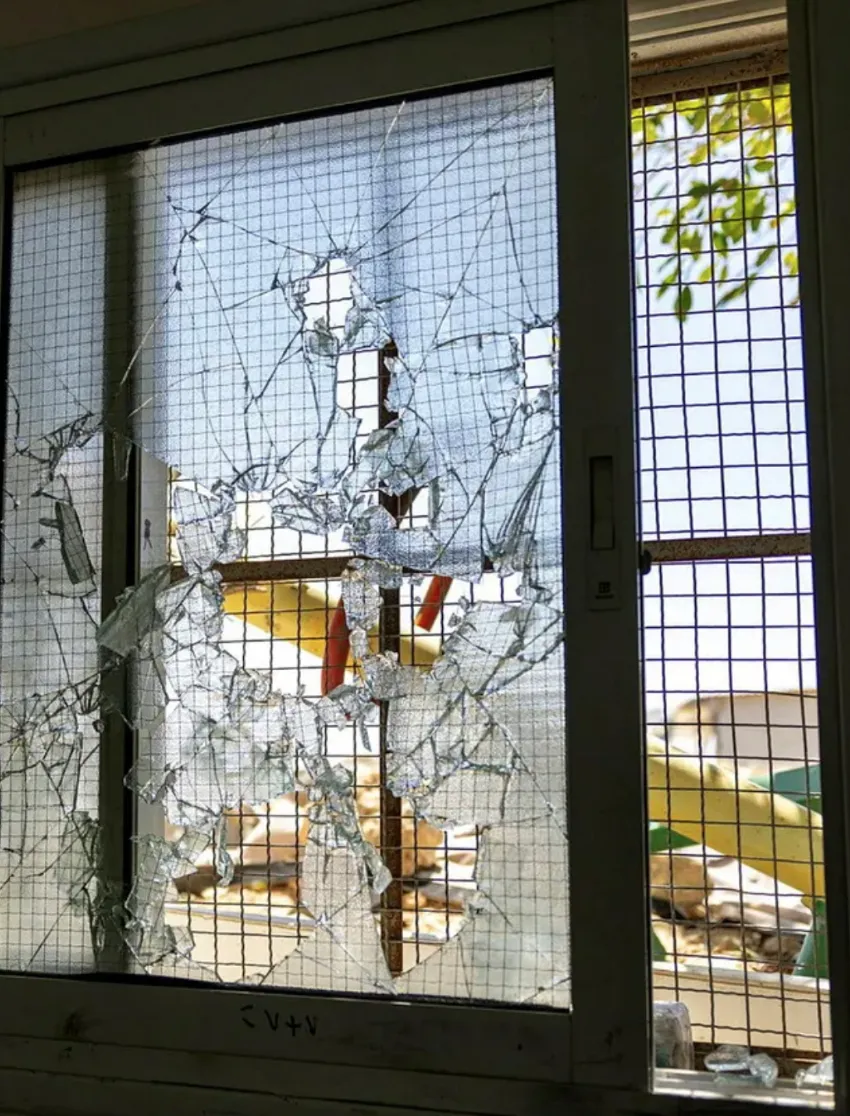
Smashed windows, wrecked possessions, trampled foodstuffs, crushed hopes. It was just after Pesach 2025 but it still seems like yesterday when Kristallnacht came to Jinba, a tiny village in Massafer Yatta whose Palestinian residents are under permanent siege by the bullies and thugs we know as settlers and the IDF. No law, no order, no human rights, no protection, no humanity, no windows for Jinba, just arm-in-arm terrorism by settlers and soldiers, who often double up in both roles.
After an hours-long daytime settler attack in full view of the IDF, the middle of the night saw 100 soldiers arrive - including settlers dressed in army uniforms. They forced every family into the freezing cold, took sledgehammers to every home’s furniture, food stores, TV, children’s school tablet, broke down the village school doors, shattering chairs, desks and windows, even the loudspeaker for sounding the bell. They ransacked the clinic, breaking treatment beds and medical supply cabinets. Nor did they forget to destroy all Jinba’s security cameras. Without being asked, BSST stepped in with an immediate grant to help get the villagers back on their feet.
Maror: bitter herbs
This maror, this bitter vegetable. Why do we eat it?
Tonight, we eat bitter maror, in remembrance of the traumas of both our past and the bitterness of the occupation. Acknowledging our bitterness is acknowledging injustice.
Raise the maror.
בָּרוּךְ אַתָּה יְיַָ אֱלֹהֵינוּ מֶלֶךְ הָעוֹלָם, אֲשֶׁר קִדְּשָׁנוּ בְּמִצְוֹתָיו וְצִוָּנוּ עַל אֲכִילַת מָרוֹר
Baruch Atah Adonai Eloheinu melech ha’olam, asher kidshanu b’mitzvotav v’tzivanu al achilat maror.
Blessed are You, Eternal G–d, sovereign of the universe, who sanctifies us with the commandment to eat maror.
The bitterness of occupation is also captured by a no holds barred Public Statement published on 18th March by The Israel Movement for Reform and Progressive Judaism and the Council of Reform Rabbis in Israel.
We also recognise the inspiring dedication of the Jordan Valley Activists. They are another group of Israelis of many backgrounds supported by BSST and who spend time embedded in rural Palestinian homes in the Jordan Valley to try to protect the villagers from violence and abuse.
Koreich: the Hillel sandwich
Koreich (the Hillel Sandwich)
Take some maror and charoset and put them between two pieces of matzah, to recall the wise first century Rabbi Hillel, who in the remembrance of the loss of the Temple, created a Korech sandwich. He said that by eating the Korech sandwich we would taste the bitterness of suffering mixed with the sweetness of liberation. We recite the following before eating the Hillel sandwich:
זֵכֶר לְמִקְדָּשׁ כְּהִלֵּל. כֵּן עָשָׂה הִלֵּל בִּזְמַן שֶׁבֵּית הַמִּקְדָּשׁ הָיָה קַיָּם: הָיָה כּוֹרְכָן וְאוֹכְלָן יַחַד, לְקַיֵּם מַה שֶּׁנֶּאֱמַר: עַל מַצּוֹת וּמְרֹרִים יֹאכְלֻהוּ.
Zecher la-Mikdash ke-Hillel. Ken asah Hillel bizman she-Beit ha-Mikdash hayah kayam: hayah korkhan ve-okhlan yachad, le-kayem mah she-ne’emar: al matzot u-merorim yokhluhu.
A remembrance of the Temple according to Hillel. Thus did Hillel when the Temple stood: he would wrap them and eat them together, to fulfill what is said: ‘They shall eat it with matzah and bitter herbs.
Charoset
Charoset is a mixture of fruits, nuts, and sweet wine (or juice/spices). It represents the mortar that Jewish slaves used to build in ancient Egypt. Its sticky texture and brown color evoke building clay, while the sweetness suggests hope and freedom after hardship.
Among groups in Gaza that BSST continues to fund, the Haifa Association—introduced to us by Sari Bashi—deserves a mention. This volunteer group has single-handedly kept hundreds of Palestinian children with Type 1 Diabetes alive, by sourcing glucometers, insulin strips and other essentials. How, where from, at what personal and financial cost, we cannot imagine.
The Seder Plate
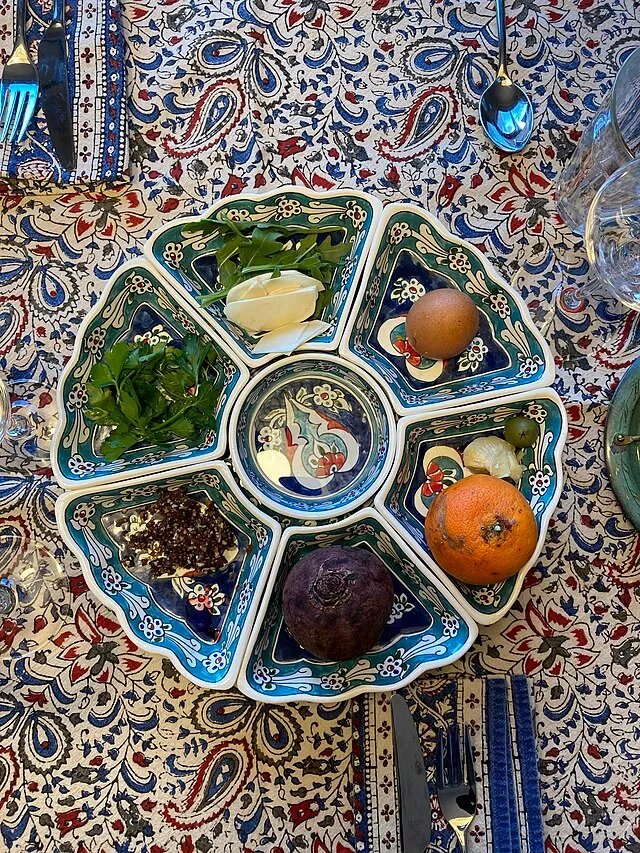
Perhaps one reason why so many Jews still enjoy a Seder is precisely because it connects us to old traditions but allows for reinterpretation and change. Nowadays a Zoom seder enables anyone interested in this ancient family and food-based, ritual to participate.
Pesach (Passover) lasts eight days and nights. The first two nights are special for their ritual seder with its book, the Haggadah (meaning ‘Telling’), and its plate of edible symbols.
It is also endlessly rewritten to echo current concerns, a dialogue between religion and secular sensibilities.
In this Haggadah we highlight the role we believe Jews must play in responding to the tragedy in Gaza and beyond. Our words may provoke discussion, reflection or even contention. We hope that this wrestling with ideas will help lead to meaningful action for justice.
Below we provide tips for your seder participation. These are NOT compulsory, so if you just want to be present, that’s fine!
Different Jewish communities have different rules and practices: in our Haggadah, we—being mostly of Ashkenazi (East European Jewish) background—focus on the traditional Ashkenazi seder Plate. Its six main ingredients are:
Matzah
the unleavened bread (a dry cracker) that Jews ate while in the wilderness Eaten instead of leavened bread for the eight days of Passover.
Zeroah
A shank bone, or maybe a chicken bone. Signifies the paschal sacrifice made before the exodus from Egypt.
Maror
Bitter herbs, usually horseradish or endive, to represent the bitterness of the slavery of our forefathers in Egypt.
Karpas
Greens, herbs of some kind, usually parsley. Used to dip into a bowl of salt water that represents our forefathers’ tears.
Charoseth
A paste, made from apples, walnuts, cinnamon and red wine. Delicious, so we often say ‘we must make it more often’ but don’t! Supposed to represent the mortar Jewish slaves used in Egypt.
Beitzah
A roasted or hard boiled egg. Represents pre-holiday offerings brought to the High Temple. This ritual meal is always changing and being updated. More recent additions include:
Zeteem
Olives- a new ritual supporting peace across Israel-Palestine, remembering the onslaught on the Palestinian community and destruction of hundreds of their olive groves on the West Bank.
Tapuz
First introduced in the ‘80s by American Jewish academic, Susanna Heschel, an orange represents those frequently marginalised by Jewish communities, like women and those who are LGBTQ+. We are meant to spit out any seeds so as to spit out the seeds of sexism and homophobia.
Variations might also involve:
- Roasted beetroot or parsnip instead of animal bone—for vegetarians
- Flower petals rather than the egg—for vegans
- Artichokes—to represent interfaith commitment, while Sephardi tradition includes beating each other with spring onions!
- Wine (or grape juice) is another vital part of the ritual throughout. Sometimes we drink from the wine glass, sometimes we dip our fingers in, and sometimes—bafflingly and annoyingly—we just lift the glass and put it down again!
Beside our Seder plate we also have:
- Salt water, lemon juice or vinegar, symbolizing the tears of the Hebrews oppressed in Egypt
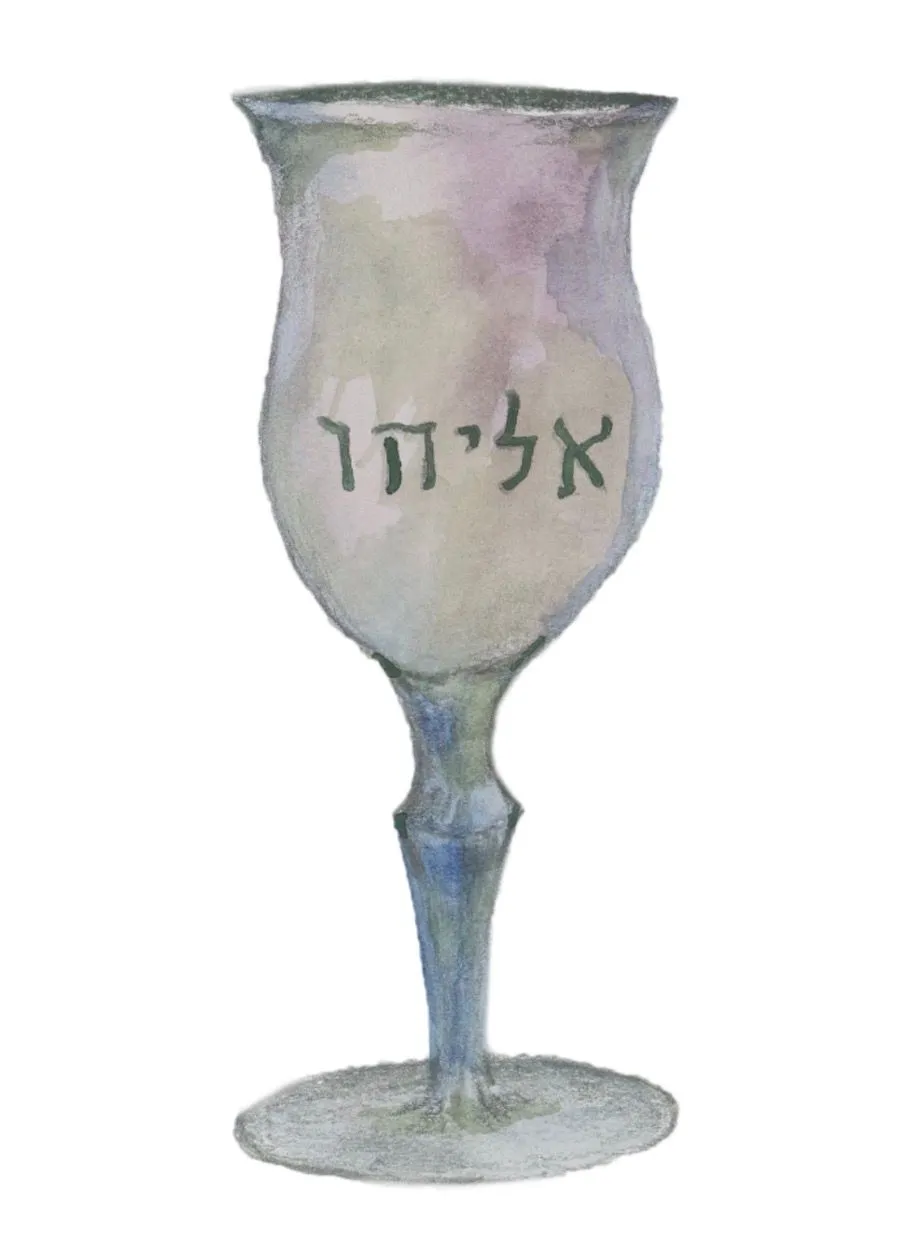
- Elijah’s Cup, a tall glass of wine to honour the Prophet Elijah who represents the unfulfilled potential of liberation; and the lesser known Miriam’s Cup, a glass of water to honour the Prophet Miriam and the leadership of countless women whose names have not been recorded.
Shulchan oreich: the virtual “meal”
While the Passover meal would normally be eaten part way through the Seder, we will just continue.
Break out rooms—5 minutes
What has brought you here tonight?
What will you take away with you?
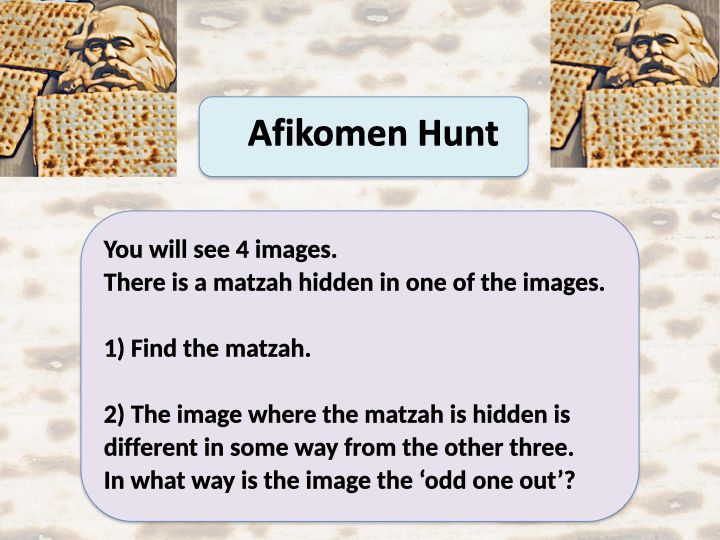
Finding the Afikomen
We hope you haven’t forgotten that the Afikomen was hidden. Now we invite everyone to hunt for the Afikomen, but without leaving your screens. The Seder highlight for children (other than dipping their fingers in wine and shouting out the plagues) is the Afikomen hunt. For the third year, BSST trustee Stephen Fox has devised another great Zoom-friendly Afikomen hunt which he will be guiding you through!
Stephen—over to you!
Bareich
בְּרִיך רַחֲמָנָא מַלְכָּא דְעַלְמָא מָרֵיהּ דְהַאי פִּיתָּא
Brich rachamana malka d’alma marei d’hai pita.
You are the source of life for all that lives and your blessing flows through us.
The complete traditional blessings after the meal may be found in your favourite haggadah.
Third Cup of Wine
(read by Rifke from Na’amod, London)
בָּרוּךְ אַתָּה יְיָ אֱלֹהֵינוּ מֶלֶךְ הָעוֹלָם בּוֹרֵא פְּרִי הַגָּפֶן
Baruch Atah Adonai Eloheinu melech ha’olam, borei p’ri hagafen.
Blessed are You, Eternal G–d, sovereign of the universe, who creates the fruit of the vine.
We pause for a moment in the seder to consider what we’re grateful for.
Fourth Cup of Wine
בָּרוּךְ אַתָּה יְיָ אֱלֹהֵינוּ מֶלֶךְ הָעוֹלָם בּוֹרֵא פְּרִי הַגָּפֶן
Baruch Atah Adonai Eloheinu melech ha’olam, borei p’ri hagafen.
Blessed are You, Eternal G–d, sovereign of the universe, who creates the fruit of the vine.
The world to come
How will the world be after the revolution/when there is peace?
Hallel and BSST Appeal
Our seder is complete. We have followed the order, told the story, performed the rites, sung the songs, and reflected on the relevance of the message of Pesach to the Jews, to the struggle for justice for Palestinians and of its universal resonance for all peoples. Let us meet next year in a world redeemed! Peace, justice and equality for all!
Let us say a final blessing:
!לְשָׁנָה הַבָּאָה בְּנֵי חוִרין
L’shana haba’a b’ney choreen!
Next year in freedom!
Now BSST’s wonderful patron, Professor Avi Shlaim, will make a short appeal on behalf of BSST.
Donate on the BSST website: bsst.org.uk/donatenow
Concluding Songs
The Seder is normally an experience shared around a dinner table. We know that Zooming a Seder is not the same as socialising close together, eating too much, arguing, having fun, and being gloriously irreverent (in how many families has the door been opened to Elijah, only to find an uncle clad in a white sheet outside?). It also includes a lengthy singsong.
We have picked a traditional song to enjoy and the glorious Bella Ciao.
Dayeinu
1
אִלּוּ הוֹצִיאָנוּ מִמִּצְרַיִם וְלֹא עָשָׂה בָהֶם שְׁפָטִים — דַּיֵּנוּ
Ilu hotzi’anu mi-Mitzrayim v’lo asah vahem shefatim — Dayeinu
If He had brought us out of Egypt and not judged them — it would have been enough.
2
אִלּוּ עָשָׂה בָהֶם שְׁפָטִים וְלֹא עָשָׂה בֵאלֹהֵיהֶם — דַּיֵּנוּ
Ilu asah vahem shefatim v’lo asah b’eloheihem — Dayeinu
If He had judged them and not their gods — it would have been enough.
3
אִלּוּ עָשָׂה בֵאלֹהֵיהֶם וְלֹא הָרַג אֶת בְּכוֹרֵיהֶם — דַּיֵּנוּ
Ilu asah b’eloheihem v’lo harag et bekhoreihem — Dayeinu
If He had slain their firstborn — it would have been enough.
4
אִלּוּ הָרַג אֶת בְּכוֹרֵיהֶם וְלֹא נָתַן לָנוּ אֶת מָמוֹנָם — דַּיֵּנוּ
Ilu harag et bekhoreihem v’lo natan lanu et mamonam — Dayeinu
If He had given us their wealth — it would have been enough.
5
אִלּוּ נָתַן לָנוּ אֶת מָמוֹנָם וְלֹא קָרַע לָנוּ אֶת הַיָּם — דַּיֵּנוּ
Ilu natan lanu et mamonam v’lo kara lanu et ha-yam — Dayeinu
If He had split the sea — it would have been enough.
6
אִלּוּ קָרַע לָנוּ אֶת הַיָּם וְלֹא הֶעֱבִירָנוּ בְתוֹכוֹ בֶּחָרָבָה — דַּיֵּנוּ
Ilu kara lanu et ha-yam v’lo he’eviranu b’tocho be-charavah — Dayeinu
If He had led us through on dry land — it would have been enough.
7
אִלּוּ הֶעֱבִירָנוּ בְתוֹכוֹ בֶּחָרָבָה וְלֹא שִׁקַּע צָרֵינוּ בְּתוֹכוֹ — דַּיֵּנוּ
Ilu he’eviranu b’tocho be-charavah v’lo shika tzareinu b’tocho — Dayeinu
If He had drowned our enemies — it would have been enough.
8
אִלּוּ שִׁקַּע צָרֵינוּ בְּתוֹכוֹ וְלֹא סִפֵּק צָרְכֵּנוּ בַּמִּדְבָּר אַרְבָּעִים שָׁנָה — דַּיֵּנוּ
Ilu shika tzareinu b’tocho v’lo sipek tzorkeinu ba-midbar arba’im shanah — Dayeinu
If He had sustained us in the wilderness forty years — it would have been enough.
9
אִלּוּ סִפֵּק צָרְכֵּנוּ בַּמִּדְבָּר וְלֹא הֶאֱכִילָנוּ אֶת הַמָּן — דַּיֵּנוּ
Ilu sipek tzorkeinu ba-midbar v’lo he’echilanu et ha-man — Dayeinu
If He had fed us the manna — it would have been enough.
10
אִלּוּ הֶאֱכִילָנוּ אֶת הַמָּן וְלֹא נָתַן לָנוּ אֶת הַשַּׁבָּת — דַּיֵּנוּ
Ilu he’echilanu et ha-man v’lo natan lanu et ha-Shabbat — Dayeinu
If He had given us Shabbat — it would have been enough.
11
אִלּוּ נָתַן לָנוּ אֶת הַשַּׁבָּת וְלֹא קֵרְבָנוּ לִפְנֵי הַר סִינַי — דַּיֵּנוּ
Ilu natan lanu et ha-Shabbat v’lo keravanu lifnei Har Sinai — Dayeinu
If He had brought us to Sinai — it would have been enough.
12
אִלּוּ קֵרְבָנוּ לִפְנֵי הַר סִינַי וְלֹא נָתַן לָנוּ אֶת הַתּוֹרָה — דַּיֵּנוּ
Ilu keravanu lifnei Har Sinai v’lo natan lanu et ha-Torah — Dayeinu
If He had given us the Torah — it would have been enough.
13
אִלּוּ נָתַן לָנוּ אֶת הַתּוֹרָה וְלֹא הִכְנִיסָנוּ לְאֶרֶץ יִשְׂרָאֵל — דַּיֵּנוּ
Ilu natan lanu et ha-Torah v’lo hichnisanu l’Eretz Yisrael — Dayeinu
If He had brought us into the Land of Israel — it would have been enough.
14
אִלּוּ הִכְנִיסָנוּ לְאֶרֶץ יִשְׂרָאֵל וְלֹא בָנָה לָנוּ אֶת בֵּית הַבְּחִירָה — דַּיֵּנוּ
Ilu hichnisanu l’Eretz Yisrael v’lo vanah lanu et Beit ha-Bechirah — Dayeinu
If He had built for us the chosen House — it would have been enough.
Bella Ciao
Notes on Contributors
Sari Bashi is a renowned human rights lawyer. Her many roles include co-founding Gisha, the Israeli NGO providing legal assistance to Gaza residents needing military permits to access work or family outside Gaza, being the global Program Director at Human Rights Watch, and teaching international humanitarian law at Yale and Tel Aviv Universities. Under a pseudonym, she wrote a touching column in Ha’aretz, describing her Jewish/Palestinian family life. She is now Executive Director of the Public Committee Against Torture in Israel: her wide-ranging interview with Peter Beinart is required listening. Her 2021 memoir Upside Down Love was recently published in English.
Mike Cushman is Membership Secretary of Jewish Voice for Liberation. With no family Seder to attend since his parents died, he is delighted to be part of our collective event.
Stephen Fox is a retired academic, a BSST trustee and an activist with Na’amod.
Na’amod Regional Activists who participated as readers are Alex from Na’amod Manchester, Carla from Na’amod Brighton and Megan from Na’amod London.
Charlotte (12) and Sophie (13) are sisters living in Brussels.
Stasa Morgan-Appel is a counsellor/psychotherapist and an activist for Na’amod
Rifke Sadleir at rifke.world created our online Haggadah, is a freelance creative technologist and works at a London University.
Nada Shawa is a Scottish Palestinian poet who writes in solidarity with her home country Gaza. Her latest collection is Indigenous Soul: Gaza And Me 2025 Edition.
Professor Avi Shlaim is an Israeli and British historian of Iraqi-Jewish descent, having been born in Iraq and emigrating to Israel when he was five years old. He is one of Israel’s leading ‘New Historians’, and has lived, studied and taught in England since the mid ‘60s, being based at St Antony’s College Oxford since 1987. His writings include The Iron Wall: Israel and the Arab World (1999), Three Worlds: Memoirs of an Arab-Jew (2023), and Genocide in Gaza (2025). He has been a supporter and Patron of BSST since its foundation.
Rabbi Lev Saul is a rabbi in south-west London. This follows an earlier career in the education and charity sectors, campaigning on workers’ rights, climate change, and global health. He is part of the Jewish-Anarchist collective, Jewdas, and presided over the Seder where Jeremy Corbyn arrived with horseradish from his allotment. He blogs at www.simlev.blog, bringing a radical Jewish perspective to issues large and small, is an educator for the Queer Yeshiva, and has been published – eclectically - in Tribune, Jewish News, Novara, Tablet and the Jewish Chronicle.
Naomi Wayne has been a trade union officer, law and equality specialist, charity worker and author. She is co-founder and secretary/trustee of BSST.
The Liberation Haggadah 2026 was produced by Stephen Fox, Naomi Wayne, Stasa Morgan-Appel and Rifke Sadleir.
Zoom technical operations were, once again, organised and managed by Mike Cushman of JVL, to whom, as always, enormous thanks.
Sari Bashi’s book, Upside Down Love, originally written in Hebrew, has only recently been translated into English, but has already become a best seller. If you want to avoid Amazon, you can buy it online at Blackwells.